
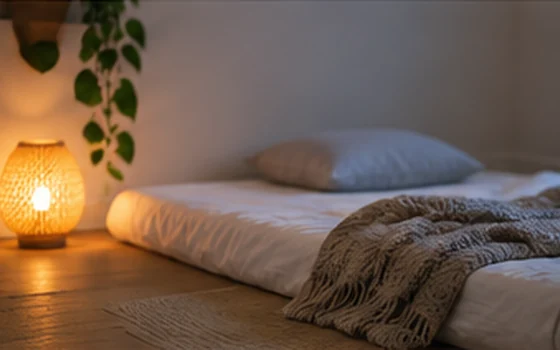
A harder surface is not automatically better for your back or sleep. Some adults prefer a low, firm setup, while others find it uncomfortable or difficult to use. Judge the practical consequences rather than a promise that the floor corrects everyone’s posture.
Separate preference from a health claim
Comfort is individual, and this guide does not establish that floor sleeping treats pain. Persistent or worsening pain deserves assessment. A surface that feels novel for ten minutes may not remain comfortable through a night.
Check getting down and up
Consider mobility, balance and whether someone may need to assist you. A low setup can be impractical during illness or injury. Do not try it when getting up could be unsafe, and keep a clear route to the bathroom.
Check the surface and surroundings
Look at dust, dampness, temperature and ventilation beneath any mattress or pad. Follow the mattress maker’s base requirements and care instructions. A floor may not meet warranty or ventilation requirements simply because it appears level.
Keep infant sleep rules separate
NIH infant sleep guidance calls for an appropriate firm, flat sleep surface such as a compliant crib or bassinet. An adult floor mattress is not an equivalent infant sleep arrangement. Adult comfort experiments should not be transferred to babies.
Compare less disruptive alternatives
A suitable foundation or different mattress may address the issue without changing the height of the bed. Our latex mattress guide is a place to compare construction, while keeping subjective comfort separate from treatment claims.
Separate a firm surface from a health claim
A floor can feel firmer than a mattress, but that does not prove it treats back pain, improves posture or produces better sleep. Think about the actual surface, insulation, cleanliness and your ability to get up safely. A photo of a minimalist room does not show whether the setup supports your body. For ongoing pain or a medical condition, ask a qualified professional before making a major change.
Check the practical risks
Cold, dampness, dust and limited mobility can make floor sleeping uncomfortable or unsafe for some people. Keep a clear path to the bathroom and consider how you will stand from the floor at night. Avoid extending adult floor-sleeping experiments to an infant; NICHD guidance calls for an appropriate firm, flat, clear infant sleep surface, not an improvised adult setup.
Try the least disruptive comparison
If you want a firmer feel, first examine the support and condition of your current mattress and bed base. A temporary trial may help you judge comfort, but one night cannot establish long-term benefit. Note pain, temperature and sleep quality rather than relying on a generalized claim. Stop if symptoms worsen, and seek medical advice for persistent pain or numbness.
Common questions
A little more clarity.
Does a harder surface always help back pain?
No. This page does not establish a universal pain benefit.
Can I put any mattress directly on the floor?
Check the manufacturer’s support, ventilation and warranty requirements first.
Is the floor proven to fix back pain?
No. Comfort and medical needs vary; seek advice for persistent pain.
Can an infant sleep on an adult floor mat?
Do not substitute an improvised setup for an approved safe infant sleep space.
What should I check first?
Cleanliness, temperature, ease of getting up and the condition of the existing bed.
When should I stop the trial?
Stop if pain, numbness or unsafe movement occurs and seek appropriate advice.
What would make a floor-sleeping trial unsuitable?
Difficulty getting down or up, pain, numbness, cold, dampness or a fall risk can make the setup a poor fit. Check the route to the bathroom and whether the surface can be kept clean. If you have back pain, a mobility condition or another medical concern, ask for individualized advice before changing your sleep surface. Stop if symptoms worsen. Compare the current mattress and base first; a worn bed may be the actual problem. Do not extend an adult floor-sleeping experiment to a baby, who needs an age-appropriate safe sleep space. One comfortable night is not proof of a long-term health benefit.