
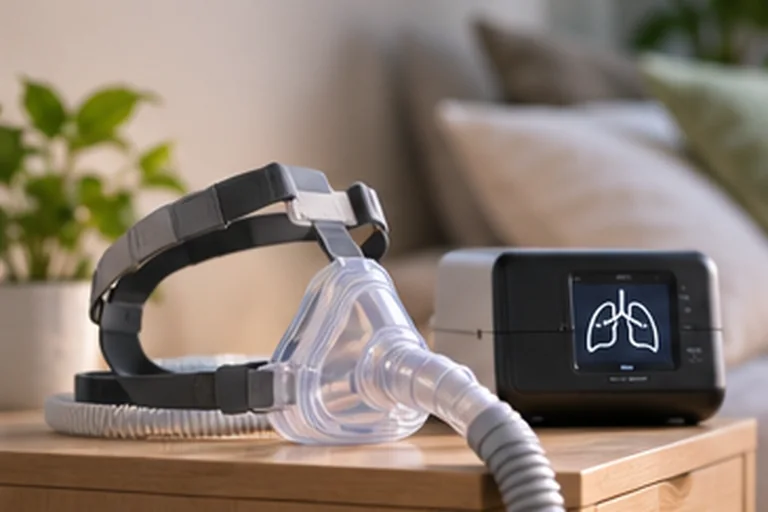
Central sleep apnea involves pauses in breathing related to the signals controlling breathing, rather than simply an obstructed upper airway. Treatment depends on the underlying cause, sleep-study findings and other health conditions. A pillow, mouth tape or self-selected breathing device is not a substitute for that assessment.
Confirm which breathing problem was measured
Ask your clinician to explain the central, obstructive and mixed events in your study. The word apnea on its own does not identify the treatment you need. Symptoms or a consumer oxygen reading cannot reliably make that distinction.
Bring the sleep-study report, a medicine list and information about any existing PAP treatment. If events appeared after treatment began, describe that sequence rather than assuming the machine should simply be stopped.
Review contributing conditions and medicines
The AASM central sleep apnea guideline emphasizes individualized care and management of contributing conditions. The goal includes symptoms and quality of life, not only a lower event count.
Heart conditions, medication effects and other circumstances can change the plan. Ask the prescribing clinician to review potentially relevant medicines. Do not abruptly stop an opioid or another prescribed drug because it appears on a list of possible causes.
Understand why PAP modes are not interchangeable
Depending on the cause, clinicians may consider CPAP, bilevel treatment with a backup rate or adaptive servo-ventilation. These modes work differently. The AASM guideline advises against bilevel treatment without a backup rate for the specified central-apnea categories.
Adaptive servo-ventilation requires particular care in people with heart failure and reduced ejection fraction. The guideline limits this situation to experienced centers with close follow-up. Existing device labeling and your cardiac assessment also matter. Do not buy or reconfigure a device from a general article.
Ask about other options in the right context
Oxygen, medicines and implanted stimulation may be discussed in selected circumstances. Their existence does not mean they are appropriate for every form of central sleep apnea. Ask why an option fits your diagnosis and what the monitoring would involve.
The NHLBI treatment overview provides a broader explanation of sleep-apnea care. Keep central-apnea treatment separate from devices aimed at upper-airway obstruction, including the Inspire system discussed elsewhere on this site.
Make the follow-up plan concrete
Before leaving the appointment, establish when treatment effectiveness will be checked, which symptoms to report and who handles equipment problems. Ask what to do if the mask leaks, treatment is uncomfortable or daytime sleepiness continues.
A useful note might record your diagnosis, the prescribed treatment, the next review date and the contact route for problems. Keep settings and prescription decisions with the clinical team rather than experimenting between appointments.
Know when to seek prompt help
Report worsening breathing symptoms, repeated treatment difficulties or persistent dangerous sleepiness promptly. Avoid driving or operating machinery when sleepy. Acute severe breathing difficulty, chest pain or fainting needs urgent medical care.
If you are considering a different treatment because the current one is hard to use, ask for troubleshooting first. A change should preserve an effective care plan rather than leave a gap while you research alternatives.
Bring the diagnosis, not only the device name
Ask for a copy of the sleep-study summary and the explanation of which events were central, obstructive or mixed. Note when testing happened, what symptoms prompted it and whether a treatment was in use. The word apnea alone does not tell you which treatment is appropriate. NHLBI's treatment overview describes several approaches and the role of a clinician in selecting them. Use the appointment to clarify what problem the current plan is meant to address and how success will be measured.
Record new symptoms, recent medicine changes and relevant health conditions before the visit. This is background for the clinician, not a reason to change a prescription yourself.
Compare options against the documented cause
Ask which underlying conditions are being evaluated and whether treating one may affect breathing during sleep. Discuss the expected benefit, limitations and monitoring of each proposed option, including any device or implant. A treatment mentioned in a general article may apply only to a defined group of patients. Request a plain explanation of why the proposed choice fits your study results, medical history and current treatment.
If a device feels uncomfortable or data appears worse, contact the treating service for a review rather than changing pressure modes or stopping treatment without guidance.
Make follow-up measurable
Agree on the symptoms, study measures or device data that will be reviewed and when. Ask who will interpret an apparent rise in events, and what to do if the equipment cannot be used. Note the contact route for urgent concerns. A single consumer sleep score cannot confirm that central events have resolved. Keep the written plan and any mask or device instructions together so different care providers can see what was prescribed.
Common questions
A little more clarity.
Can side sleeping cure central sleep apnea?
Do not rely on position as treatment for central apnea. The cause and breathing-control problem need clinical assessment.
Should I change PAP settings myself?
No. Discuss symptoms and recorded data with your sleep team so changes match the diagnosis and prescribed device.
Does an oxygen reading diagnose central apnea?
No. An oxygen reading does not identify the type of breathing event. Diagnosis and treatment selection require appropriate clinical evaluation.
Is every PAP mode suitable?
No. Modes have different indications and settings. Use the one prescribed for your situation and ask the treating team about concerns.
Can an underlying condition matter?
Yes. The clinician should review the broader health picture and medicines when planning treatment.
What should follow-up include?
Ask which symptoms and objective results will be reviewed, when the review occurs and whom to contact about problems.