
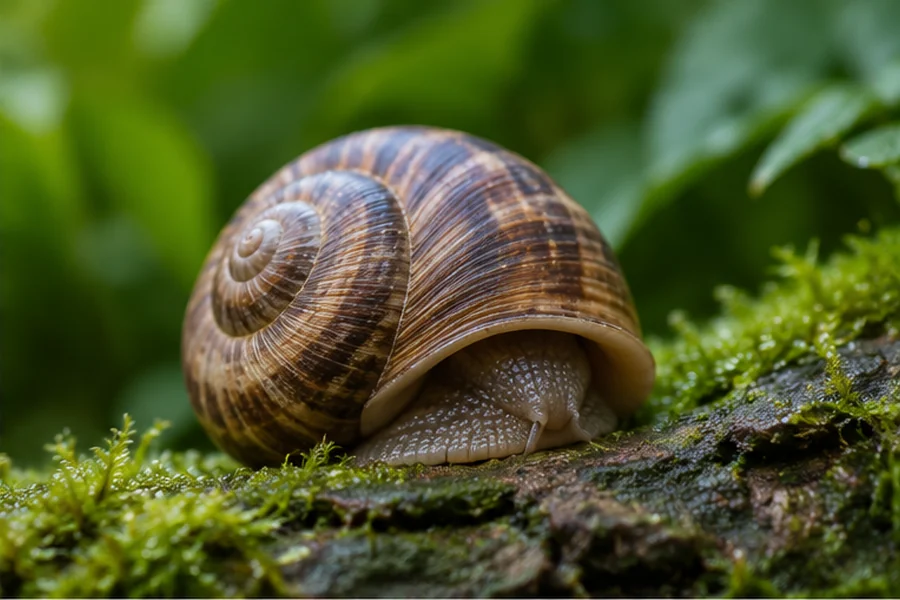
There is no single sleep duration that describes every snail. Land and aquatic species live in different conditions, and prolonged inactivity can involve dormancy rather than ordinary sleep. A striking number needs a species and a definition before it is useful.
Begin with the species
A garden snail and an aquatic snail should not be assumed to share the same daily pattern. Reliable care information needs the actual species and environment. Avoid transferring a fact from a short social-media caption to every animal with a shell.
Distinguish weather-related dormancy
The Natural History Museum describes aestivation in dry conditions and hibernation in cold conditions. These states help explain long periods of inactivity. They should not be described as a normal nightly sleep lasting years.
Do not test rest by disturbance
Observe rather than poking, drying or repeatedly moving the animal. For a kept snail, review species-appropriate humidity, temperature and food with a knowledgeable care source. Inactivity should not automatically be treated as either perfect health or a need to wake it.
Read research claims precisely
Ask which species was observed, under what conditions and how researchers defined sleep. A period without movement is not enough to establish a universal cycle. Our animal sleep overview explains why responsiveness and other measures matter.
Keep uncertainty visible
This page does not give one hourly quota because the broad question does not support one. A careful answer can be useful without a dramatic number. If a pet’s behavior changes unexpectedly, seek species-specific advice rather than relying on a generic sleep fact.
Separate sleep from dormancy
Snails can become inactive under different conditions, including dry or cold periods. A long spell of inactivity should not be casually described as ordinary nightly sleep lasting years. Species and environment matter. Ask what researchers measured before repeating a precise number. A stationary snail may be resting, dormant or unwell; appearance alone cannot identify the state.
Observe without disturbing
For a kept snail, check species-appropriate humidity, temperature and food with a knowledgeable care source. Do not repeatedly poke, dry or move it to test whether it is asleep. For wild snails, observe from a distance. If a pet's behavior changes unexpectedly, seek species-specific advice rather than using a dramatic internet sleep claim as reassurance.
Read the evidence behind a statistic
A useful source should identify the species, observation conditions and definition of sleep. A statement about one laboratory setting should not be generalized to every snail. Our animal sleep overview explains why responsiveness and other measures matter across species. It is more accurate to say that rest and dormancy vary than to promise one universal hourly quota.
Common questions
A little more clarity.
Do all snails sleep for years?
No. Long dormancy claims should not be treated as ordinary sleep shared by all snails.
Does an unmoving snail always need waking?
No. Identify the species and context, and avoid disturbing it simply to test a theory.
Do all snails sleep for years?
No. Long dormancy is not the same as normal nightly sleep for every snail.
Does no movement prove sleep?
No. Inactivity can have several explanations.
Should I wake a pet snail?
Avoid disturbing it simply to test a claim; seek species-specific advice if concerned.
Why do sources give different numbers?
They may study different species or define rest and dormancy differently.
What should I do if a pet snail stays inactive for a long time?
Identify the species and check its normal requirements for humidity, temperature, food and enclosure conditions with a knowledgeable care source. Do not poke, dry, heat or repeatedly move the snail to see whether it wakes. Prolonged inactivity could reflect dormancy or a problem, and a generic claim that snails sleep for years does not answer the pet-care question. Record when you last observed normal activity and any environmental changes. Seek species-specific advice if you are concerned. The useful response protects the animal while acknowledging that stillness alone cannot tell you its physiological state.