
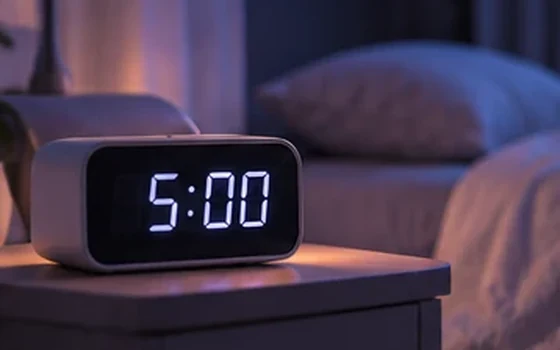
Five hours may be all a difficult night allows, but it is not a suitable default target for most adults. Familiarity with a short schedule is not proof that it meets your needs. Look at both opportunity for sleep and how you function during the day.
Start with age-based guidance
CDC sleep guidance recommends at least seven hours for adults aged 18 to 60. Five hours falls below that guidance. Individual circumstances still matter, but an online quiz or a productive morning cannot establish that chronic restriction is harmless.
Identify where the hours are going
Separate time spent working, traveling, caring for others and winding down. Choose one change that genuinely frees time rather than adding another bedtime task. A sleep plan must fit responsibilities, and some barriers require help from other people.
Do not trade away sleep for a cycle calculation
Sleep cycles are not a fixed appointment you can reliably schedule around. A calculator cannot turn five hours into a full night. Keep enough opportunity for rest instead of using a predicted stage boundary to justify a shorter bedtime window.
Handle an unavoidable short night conservatively
Reduce driving and demanding tasks if sleepy. Arrange a safer alternative when alertness is unreliable. Avoid treating an extra stimulant or a cold shower as evidence that the underlying sleep loss has been corrected.
Seek help if the opportunity is there but sleep is not
If you allow adequate time and still regularly sleep only five hours with distress or impairment, discuss it with a clinician. Persistent insomnia may need a specific treatment plan. Read our guide to nighttime waking for practical next steps.
Put the number in context
For most adults, five hours is below the range recommended for regular sleep. CDC guidance lists seven or more hours for adults aged 18–60, while needs can vary. One unavoidable short night is different from a schedule that repeatedly allows only five. Record both time in bed and how you function; the question is not answered by a wearable giving the night a high score.
Watch for hidden costs
People can become accustomed to feeling tired and still have reduced attention. Notice unintended naps, irritability, mistakes and difficulty staying alert during driving or work. Caffeine can delay the feeling of sleepiness but cannot replace the missing opportunity. If a job or caregiving pattern repeatedly limits rest, plan support and safer handoffs rather than searching for a way to make five hours universally sufficient.
Address the cause of the short window
Ask what prevents an earlier bedtime or later waking: shift timing, insomnia, household duties or an untreated symptom may need different solutions. Protect a realistic sleep window and make the bedroom suitable for it. If you allow enough time but cannot sleep, or remain sleepy despite more opportunity, discuss the pattern with a clinician. Avoid an extreme sleep-restriction plan without professional supervision.
Common questions
A little more clarity.
What if I feel used to five hours?
Feeling accustomed to a schedule does not establish that it meets your sleep needs.
Can a nap always replace missing night sleep?
No. A nap may be useful in some schedules, but it is not a universal replacement for adequate regular sleep.
Can I train myself to need only five hours?
Do not assume so. Most adults need more, and regular restriction can affect safety and health.
Does a high sleep score make five hours enough?
No. A consumer score does not replace adequate sleep opportunity.
Will weekend sleep erase a week of short nights?
It may help some recovery, but it is not a reason to maintain a chronically short schedule.
When should I ask for help?
Ask when the pattern is persistent, you cannot extend sleep, or daytime sleepiness affects safety or function.