
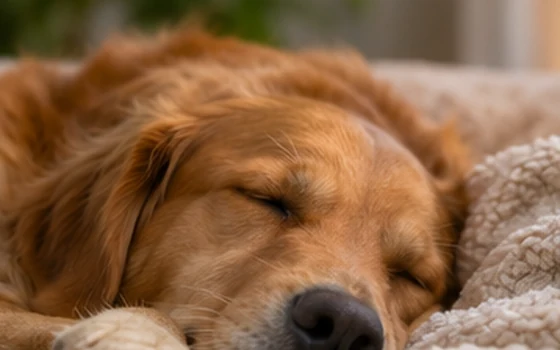
Dogs often rest in several periods across a day. A human-style expectation of one night and constant daytime activity is not a useful standard. The important question is whether your dog’s pattern has changed and how it behaves when awake.
Expect individual variation
PDSA discusses dogs and sleep with attention to differences between animals. Age, activity and circumstances affect rest. Broad hour ranges should not be used to diagnose a particular dog from a single quiet afternoon.
Distinguish resting from being difficult to rouse
A dog lying with closed eyes may be resting rather than continuously asleep. Notice appetite, interest in familiar activities and normal interaction. Do not repeatedly wake the animal to test it, but seek advice about unusual unresponsiveness or a marked change.
Provide a comfortable resting place
Offer a quiet place where the dog can choose to rest without constant interruption. Keep children from disturbing a sleeping dog. Make access suitable for mobility needs and discuss pain or difficulty settling with the veterinarian.
Look beyond the total
Changes in breathing, appetite, drinking, movement or nighttime rest can matter more than a rough hour count. Record what is different and when it began. Severe breathing difficulty or collapse needs urgent veterinary help.
Avoid using exercise as a cure for every problem
Appropriate activity and enrichment matter, but forcing more exercise is not the answer to unexplained lethargy. Ask about the dog’s health and needs. Our cat sleep article illustrates why species and individual context matter.
Compare this dog with its usual pattern
Dogs rest throughout the day, and age, activity and environment affect how much they appear to sleep. A puppy, an older dog and a working dog may have different routines. The most useful question is whether your dog's pattern changed. Note appetite, energy during walks, toileting and behavior when awake. A single hourly number from an internet article cannot diagnose a particular animal.
Observe sleep and quiet rest separately
A dog lying still with eyes partly closed may be resting rather than in one measurable sleep stage. Home cameras and collars can suggest activity patterns but are not veterinary diagnostic tools. Give the dog a comfortable, safe place to rest and avoid repeatedly waking it to check the tally. Exercise and stimulation should fit the dog's health and veterinary advice.
Ask for veterinary advice about change
A sudden increase in rest, difficulty waking, weakness, pain or a major behavior change warrants a veterinarian's assessment. Bring a short record and any changes in medicine, feeding or activity. Do not use a human sleep supplement or assume that more sleep is always a sign of boredom. Our cat rest guide makes the same distinction between a species pattern and an individual change.
Common questions
A little more clarity.
Should my dog stay awake whenever I do?
No. Dogs can distribute rest differently from people.
Does sleeping more always mean aging?
No. A new change should not automatically be attributed to age without considering health.
Is there one normal hour total for every dog?
No. Age, breed, activity and health matter.
Can a collar diagnose a sleep problem?
No. It may show activity trends but cannot replace veterinary assessment.
Should I wake a resting dog often?
Avoid unnecessary disturbance; provide a safe rest area.
When should I call a vet?
Call about a sudden change, weakness, pain or difficulty waking.
How should I describe a sleep change to the veterinarian?
Note when the change began, how much the dog rests compared with its own usual routine and whether it still enjoys normal walks or play. Record appetite, drinking, toileting, medicines, pain signs and whether the dog is difficult to rouse. A collar's activity chart can be background, but it does not diagnose the cause. Do not wait for an exact daily-hour threshold if the animal seems weak or unwell. A veterinarian can assess the dog in context and advise whether age, illness or another factor needs attention. Avoid human sleep products or forced exercise while investigating.