
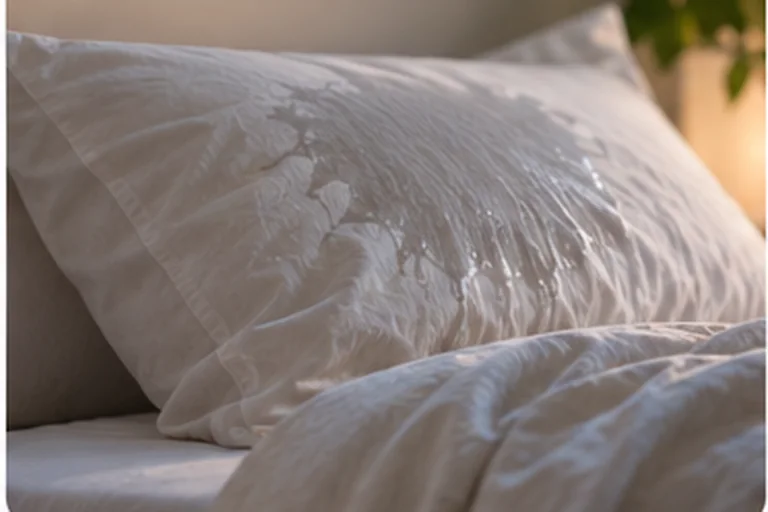
Waking warm under heavy bedding is different from repeatedly soaking nightclothes in a cool room. The distinction helps describe the problem, but it does not identify the cause. Persistent or unexplained night sweats deserve medical advice.
Describe the amount and setting
NHS guidance defines night sweats in terms of soaking clothing or bedding despite a cool environment. Note how often it occurs and whether the room or bedding reasonably explains it. Keep the description concrete.
Make straightforward comfort changes
Use bedding and clothing appropriate to the room and check whether heating stays on overnight. Change damp items so you can rest comfortably. These steps can address an overly warm setup without proving that every cause has been resolved.
Include other symptoms
Tell a clinician about fever, cough, unexplained weight loss or a continuing change in health. Bring a medication list and note when symptoms began. Do not stop prescribed treatment abruptly because sweating appears in a list of possible side effects.
Do not diagnose from a mattress label
A cooling material claim does not assess an underlying symptom. If you are comparing bedding, focus on practical comfort and care, while seeking help for repeated drenching sweats. A new product should not postpone that conversation.
Choose the next step by persistence and severity
Arrange medical advice for recurring or worrying sweats, particularly with associated symptoms. Seek urgent care for severe illness or breathing difficulty. Our nighttime sleep guide addresses broader patterns without assuming the cause.
Describe the sweating and the setting
A warm room or heavy bedding can cause nighttime sweating, but persistent or drenching sweats can have other causes. Note the room temperature, clothing, fever, medicines and whether the sweating is new. Avoid diagnosing it from a sleep tracker or a single online list. A simple record of frequency and associated symptoms is more useful for a clinician.
Make reasonable comfort changes
Try bedding and clothing that suit the room and keep the space comfortable. Avoid making the room so cold that it disrupts sleep or creates another problem. If a new medicine may be involved, discuss it with the prescriber rather than stopping it yourself. Do not assume that a cooling mattress treats an underlying condition. The product may improve comfort without answering why the sweating occurs.
Seek care for concerning patterns
Talk with a healthcare professional about persistent, unexplained or drenching night sweats, especially with fever, weight change, pain or other symptoms. Seek prompt help for severe acute symptoms. Share the record and any recent medicine or health changes. The aim is to identify the cause while preserving safe, comfortable sleep, not to mask an ongoing problem with more layers of gadgets.
Common questions
A little more clarity.
Are all night sweats caused by a warm duvet?
No. Room conditions are one consideration, not a universal explanation.
Will a cooling mattress treat the cause?
It may change comfort, but it cannot diagnose or treat every cause of sweating.
Is a warm room the only cause?
No. Persistent or unexplained sweats deserve medical discussion.
Should I stop a medicine that might cause it?
Do not stop prescribed medicine without speaking with the prescriber.
Can a cooling mattress diagnose the issue?
No. It may change comfort but not identify an underlying cause.
What should I record?
Note frequency, bedding, room conditions, medicines and associated symptoms.
How can I distinguish a warm room from a pattern worth discussing?
Start by noting room temperature, bedding, clothing and whether sweating occurs only on unusually warm nights. Record if it is new, frequent or drenching, and whether fever, weight change, pain or other symptoms occur. Review medicines with the prescriber rather than stopping them yourself. A cooling mattress may make the bed more comfortable but will not diagnose the cause. Discuss persistent or unexplained night sweats with a healthcare professional, and seek prompt help for severe acute symptoms. A concise record makes the conversation more useful than a tracker score that does not measure why you are sweating.