
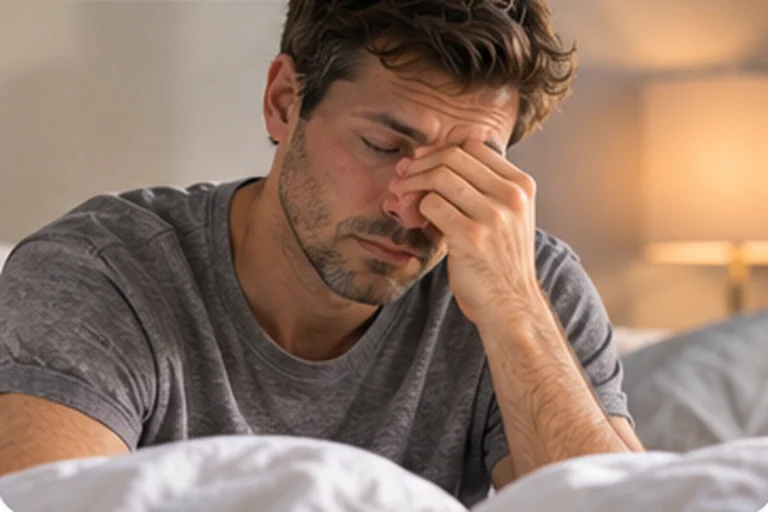
A record for staying awake cannot tell you how long it is safe to do so. Attention and judgment can become unreliable before a person recognizes the full problem. The useful response to prolonged wakefulness is to protect rest and safety, not test a limit.
Do not use an endurance record as advice
Highly unusual observations do not establish a safe threshold. People differ in their circumstances, and feeling determined does not prevent impairment. Avoid challenges, bets or productivity plans that deliberately remove sleep.
Treat the immediate task as a safety decision
If you are struggling to stay awake, stop driving or operating equipment and arrange a safe alternative. Postpone consequential decisions when possible. Caffeine can change how alert you feel without replacing the sleep that is missing.
Understand what insufficient sleep can affect
NHLBI explains sleep deficiency in terms of health and daily functioning. Rather than counting toward an extreme number of hours, look at errors, dozing, irritability and the ability to perform ordinary tasks safely.
Distinguish no opportunity from inability to sleep
Work, caregiving or travel may prevent rest. Other people have a protected sleep window but cannot sleep. These situations need different solutions. Ask for practical support with responsibilities, and seek clinical advice for persistent inability to sleep despite an opportunity.
Get help when symptoms are severe
New confusion, hallucinations, severe agitation or an inability to stay safe needs urgent medical assessment. If prolonged wakefulness accompanies unusually elevated energy or risky behavior, mention that clearly. Do not combine sedating products in an attempt to force sleep.
Avoid the record-setting frame
A dramatic number of hours awake is not a safe target or a useful personal limit. Effects on attention, judgment and mood can arrive well before a famous endurance record. CDC sleep guidance explains the role of adequate sleep in daily safety and health. The answer depends on the person and conditions, and an online record cannot tell you how you will function after another night awake.
Make the next hours safer
If you have been awake for an extended period, avoid driving, heavy machinery and other tasks where a lapse could harm you or others. Arrange transport or help with essential responsibilities. Do not use caffeine or a stimulant as a promise that you are safe to continue. Plan an adequate sleep opportunity in a suitable place. If you cannot sleep despite trying, or your thoughts or behavior become unusual, seek prompt medical advice.
Identify why sleep is absent
Insomnia, shift work, caregiving, illness, substances and an unsafe environment call for different responses. A brief record of when you slept, medicines and symptoms can help a clinician assess the situation. Do not experiment with high doses of sedatives or combine them with alcohol to force sleep. If an immediate safety or mental-health concern is present, use local urgent services.
Common questions
A little more clarity.
Is there a safe maximum number of hours awake?
There is no universal number that makes an intentional sleep-deprivation challenge safe.
Can I make up all the lost sleep in one night?
Recovery varies. Do not assume one long night immediately restores safe performance.
Is there a safe world-record challenge?
No. Prolonged wakefulness can impair safety; do not treat a record as a personal experiment.
Will caffeine make me safe to drive?
No. It can mask sleepiness temporarily but cannot guarantee safe alertness.
What if I cannot sleep at all?
Seek medical advice, especially if the problem persists or is accompanied by concerning symptoms.
Can I catch up in one nap?
A nap may help temporarily, but it does not fully replace adequate sleep.